The Evolution of Music Production: Navigating the Digital Landscape
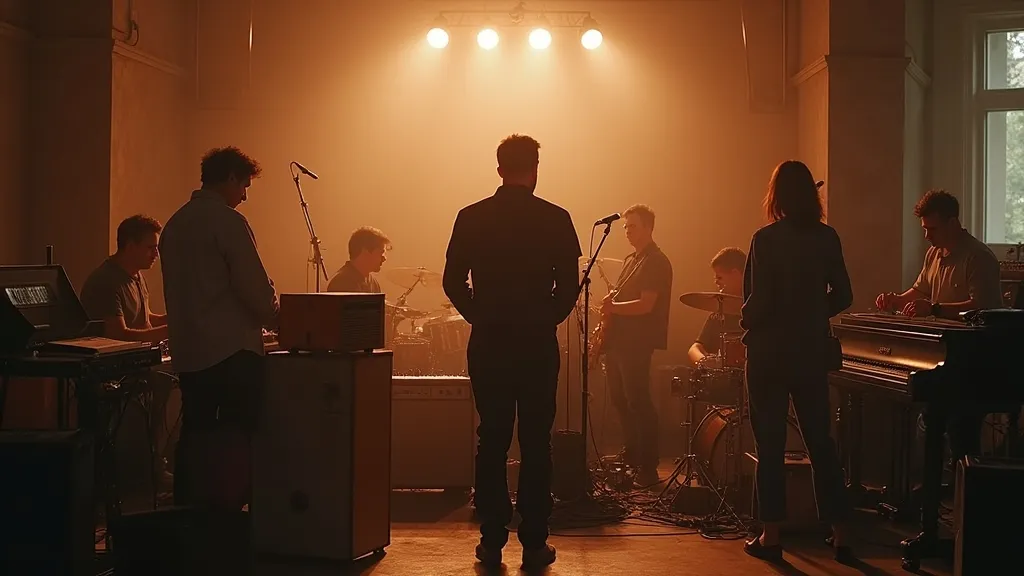
The landscape of music production has undergone a seismic shift over the past two decades, driven largely by technological advancements. Gone are the days when professional-grade music could only be crafted in lavish studios with expensive equipment. Today, aspiring musicians and seasoned professionals alike find themselves navigating a digital landscape rife with both opportunities and challenges.
The rise of affordable software and hardware has democratized music production, allowing anyone with a passion for sound to create, mix, and distribute their music. This transformation has sparked a debate on whether such democratization enhances or dilutes the quality of music being produced.
The Democratization Dilemma
The democratization of music production signifies a monumental change in how we perceive creativity. According to a report from the International Federation of the Phonographic Industry (IFPI), the global recorded music market has grown by 7.4% in 2020, largely propelled by the growth of streaming platforms and independent artists. This surge provides a fertile ground for the discussion surrounding music production and its implications for artists, producers, and the industry at large.
As Barry Schwartz, a noted music producer in Los Angeles, succinctly puts it: “The tools are in everyone’s hands now. The question is: what are you doing with them?” This is the crux of the issue. While accessibility has increased, it has also led to a saturation of the market, where anyone with a laptop can release their music. The challenge then becomes distinguishing quality from quantity.
The Tools of the Trade
In the realm of music production, technology serves as both a catalyst and a crutch. Software like Ableton Live and FL Studio, paired with affordable hardware such as MIDI controllers and audio interfaces, allow budding producers to create high-quality tracks from the comfort of their own homes. A 2019 survey by the National Endowment for the Arts found that home studios have become the norm, with 42% of musicians reporting they produce music at home.
Is this a boon for creativity? Definitely. Is it a curse for the industry? Possibly. In a world where songs flood platforms like Spotify daily, the challenge lies in how artists can innovate while still appealing to listeners in an ever-evolving landscape.
In his article on music production, musicologist David Byrne affirms, “Technology has made it easier to record music, but it has also made it easier for mediocrity to prevail.” He references the paradox of convenience; while tools have become more accessible, the artistry of music production can sometimes become secondary to the ease of creation.
Quality vs. Quantity
The question of quality versus quantity is paramount in the discussion of modern music production. With platforms like TikTok and SoundCloud promoting short-form content, many artists feel pressured to produce music rapidly to remain relevant. The 2021 IFPI report indicated that over 60,000 new songs are uploaded daily to Spotify, leading to an overwhelming auditory flood for consumers.
This influx raises a critical question about artistry. “Are we sacrificing depth and substance for the sake of volume?” asks Laura Marling, an acclaimed folk artist. “I worry that the immediacy of production is detracting from the thought and craft that used to go into making an album.”
Take Billie Eilish as a counter-example. Her meteoric rise can be attributed to both the accessibility of production tools and her intentional artistic direction. Collaborating with her brother Finneas O’Connell in their home studio, she exemplifies how digital tools can be wielded creatively rather than as mere shortcuts. The duo’s attention to detail and dedication to crafting a unique sound has resulted in multiple Grammy wins, proving that even in a saturated market, quality can still shine through.
Bridging the Gap: Education and Expertise
While technology has made music production more accessible, it has also rendered a need for education and understanding. Programs like Berklee Online and Codecademy offer courses designed to teach budding producers the ins and outs of digital audio workstations (DAWs) and sound design. Such educational initiatives aim to bridge the gap between amateur production and professional quality.
Dr. Adam Neely, a music educator and YouTube personality, argues that formal education in music production can provide a solid foundation that enables artists to break the rules intelligently. “When you understand the theory behind your craft, you can manipulate it to your advantage,” he notes in one of his videos discussing modern production techniques.
However, there’s a counterargument. The rise of online tutorials and DIY resources raises the question of whether extensive training is still necessary. Many successful artists have emerged from self-taught backgrounds, highlighting that passion and instinct can sometimes outweigh formal education.
The Role of Collaboration
Collaboration is another significant aspect of the music production landscape. In the past, artist-producer relationships were often confined to studios and pre-arranged contracts. Today, thanks to digital platforms, collaborations can happen remotely across the globe. Artists can collaborate seamlessly, sending files back and forth through services like Splice or Dropbox.
This shift allows for a diverse range of influences and styles to merge, creating unique sounds that may not have been possible in traditional settings. “In the digital age, collaboration has become a necessity, not just a choice,” states producer Kaytranada. “It opens up the music to new perspectives, pushing boundaries that we didn’t even know existed.”
However, this form of collaboration can also lead to an over-saturation of creativity. With so many voices involved, the end product may lack a cohesive vision, leading to fragmented songs that struggle to resonate with audiences.
The Commercial Side of Music Production
The commercial implications of music production also warrant attention. As the industry shifts, monetization strategies are evolving. Streaming platforms offer artists a new way to generate revenue, yet the payout per stream is notably low. According to a study by Music Business Worldwide, artists receive an average of $0.003 to $0.005 per stream, prompting musicians to seek alternative revenue streams, such as merchandise, live performances, and crowdfunding.
This shift has resulted in a focus on singles rather than albums. Record labels are prioritizing hits, often encouraging artists to produce catchy, radio-friendly songs that can go viral. “The album is dead,” states industry veteran Mark Ronson. “In this landscape, you have to rethink the way you craft your music.”
While this may seem pragmatic, it raises concerns about the future of artistic expression. Will artists be forced to prioritize commercial viability over creative exploration? Can innovation thrive in a world that favors algorithms over artistry?
The Future of Music Production
As we navigate the complexities of modern music production, one thing is clear: the industry is in constant flux. With advances in artificial intelligence (AI) and machine learning, we are witnessing a burgeoning trend where algorithms will soon play a significant role in producing and analyzing music. These tools promise to streamline the creative process, allowing producers to focus on artistic vision.
For instance, platforms like Landr use AI to assist in mixing and mastering, enabling musicians to achieve professional-sounding tracks even without extensive technical skills. While this might be a boon for accessibility, experts caution against over-reliance on technology.
“At the end of the day, music is a human experience,” says industry expert Michelle Phillips. “No algorithm can replicate the emotion and connection that an artist brings to their work.”
Final Thoughts
The evolution of music production encapsulates the broader narrative of creativity in the digital age. While the tools have made music creation more accessible than ever, they have also introduced complexities that challenge the notion of artistry. As we continue to witness the rise of independent artists and the impact of technology, the future remains uncertain yet promising.
Ultimately, the challenge for artists and producers will be maintaining authenticity amidst an oversaturated market, finding ways to connect with audiences while navigating the intricacies of commercial appeal. The journey of music production will always be as much about creativity as it is about technology; the balance between the two will shape the future of the industry.
This digital evolution might be daunting, but it also presents an invigorating opportunity for those willing to engage with it thoughtfully. As we learn to navigate the shifting sands of this industry, one thing remains certain: the heart of music production will always beat with human emotion and creativity.
For more insights into what it takes to produce music in today’s world, check out our guide on Busting Myths in Music Production: What You Really Need to Know or dive deeper into the intricacies of home studios in A Beginner’s Guide to Music Production: Crafting Sounds from Home.